


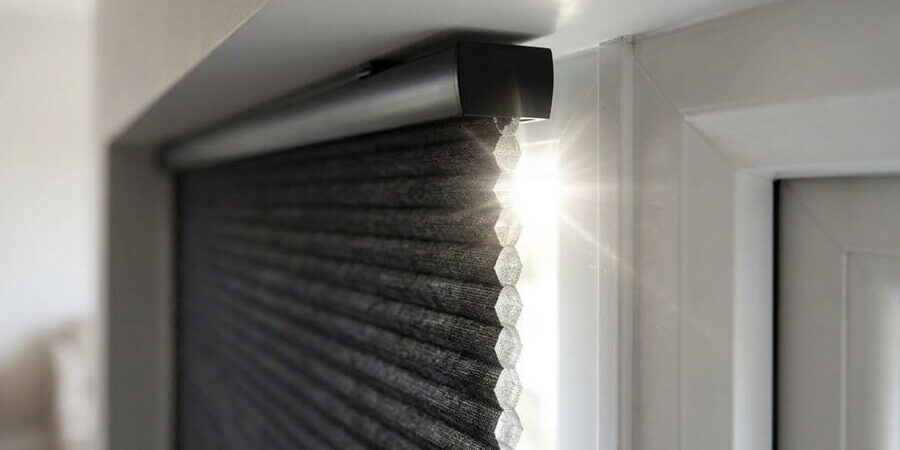
A blind that leaves a strip of light down each side, or a triangle of glow across the top, is not just a cosmetic annoyance. In a bedroom it ruins a lie-in, and in a bathroom or a street-facing room it undermines the privacy the blind was fitted for in the first place. Gaps around blinds almost always trace back to one of a handful of causes, and most of them can be fixed without buying a new blind.
What Usually Causes the Gap?
- The window was measured with only one width reading, missing a recess that narrows toward the top or bottom.
- The blind was fitted inside the recess without enough overlap to cover the full opening.
- The wrong mounting position was used for the window, inside recess where outside frame would have covered more, or the other way round.
- The recess itself is not quite square, which is common in older properties.
Which of these applies to your window usually decides whether the fix is quick or means a new blind entirely.
Why a Blind Doesn’t Fit Properly in the First Place?
Measurement is the single biggest cause. A window recess narrows or widens at different heights more often than people expect, so a blind ordered from one width measurement can end up too narrow for the tightest part of the recess further down, leaving a visible strip at the side. Millimetres matter here too. Reading a tape measure in centimetres instead of millimetres, an easy mistake to make, produces an error large enough to leave a real gap.
Mounting position is the second major cause. A blind hung inside the recess only ever covers the width of that recess, so any light that can reach the edges of the glass at an angle will still get past it. A blind mounted outside the recess, over the frame rather than inside it, covers more of the wall and blocks that angled light instead.
Blinds Not Fitting Properly on Older or Irregular Windows
Older properties are more likely to have a recess that isn’t perfectly square, or plaster that has settled unevenly over the years. On a window like that, the same blind can look like a perfect fit at eye level and still leave a gap higher up or lower down, because the opening itself is not a true rectangle. Blinds for odd shaped windows need to be measured against the tightest point of the opening, not an average, which is where a lot of off-the-shelf orders go wrong.
Wood movement plays a part too. Wooden blinds can expand slightly in humid weather and contract again once it dries out, which is rarely enough to cause a real problem but can show up as a small seasonal gap that wasn’t there when the blind was first fitted.
How to Stop Light Coming Through Blinds Without Replacing Them
If the blind itself is the right size and the issue is really about light creeping round the edges, a few fixes work before you reach for a replacement. Self-adhesive light-blocking strips fitted along the frame narrow the gap without needing to remove the blind. A second blind or a curtain layered over the top, positioned outside the recess rather than inside it, covers the angles the first blind can’t reach on its own.
For light coming in from above rather than the sides, the fix is usually different again. Ceiling mounted blinds close that gap by anchoring above the window rather than to the frame, which removes the top gap that a standard bracket mount can leave on some window shapes.
When Gaps Are Really a Privacy Problem
Not every gap is about daylight. On a street-facing window, the same edge gaps that let light in after dark can let passers-by see movement or shapes inside, especially with the room lit and the outside dark. If privacy is the main worry rather than light, privacy blinds made from a denser fabric close that same gap with less risk of anyone seeing in, even where a small edge gap remains.
Getting It Measured Properly
A gap that keeps coming back after more than one attempt at a fix is usually a sign the original measurement, not the blind, was the problem. Contact Expression Blinds and we’ll measure the actual window rather than working from guesswork, so the blind fits the recess it’s actually going into.
If you’re weighing up the cost of getting it remeasured against buying a whole new blind, our price guide breaks down what each option is likely to cost.
FAQs
Why do my blinds have gaps at the side?
Usually because the window was measured at only one point, and the recess narrows or widens elsewhere, or because the blind was fitted inside the recess when an outside-mounted blind would have covered more of the opening.
Why are my blinds not fitting properly even though I measured the window?
A common cause is measuring in centimetres by mistake, or taking only one width reading on a recess that narrows toward the top or bottom. The blind needs to fit the tightest part of the opening, not an average width.
Do wooden blinds shrink or expand and cause gaps?
Wooden blinds can move slightly with changes in humidity, expanding a little in damp weather and contracting again once it dries out. It’s rarely enough to cause a real problem, but it can show up as a small seasonal gap.


