


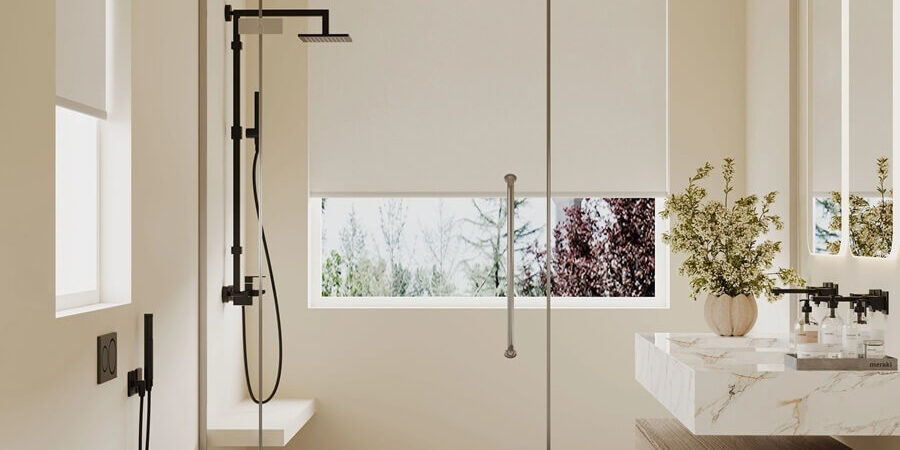
Bathrooms are one of the toughest environments in the home for window coverings. Between daily showers, condensation, changing temperatures, and limited ventilation, the wrong choice can quickly start to show signs of wear.
That’s why many homeowners look for waterproof bathroom blinds or moisture-resistant alternatives when updating their space. The challenge is knowing which options genuinely cope well with humidity and which are better suited to drier rooms.
If you’re planning a bathroom refresh, here’s what to consider before choosing your next window treatment.
What Matters Most in a Bathroom?
When comparing blinds for a bathroom, appearance is only part of the decision.
A good bathroom blind should be able to handle moisture without warping, be easy to keep clean, and provide enough privacy without blocking too much natural light.
The best options usually offer:
- Resistance to moisture and condensation
- Easy maintenance
- Reliable privacy
- Long-term durability
- A style that complements the room
Bathrooms vary considerably, so what works well in a downstairs cloakroom may not be the best choice for a busy family bathroom.
Roller Blinds Remain a Popular Choice
For many homeowners, roller blinds offer the best balance of practicality and appearance.
Modern waterproof blinds for bathroom windows are available in a wide range of colours, patterns, and finishes, making it easy to find something that suits the rest of the room.
They’re particularly useful in smaller bathrooms where space is limited and where simple maintenance is a priority.
Many bathroom double roller blinds also provide greater flexibility, allowing you to adjust privacy and light levels throughout the day without compromising either.
Because roller blinds have fewer moving parts and smooth surfaces, they’re often easier to wipe clean than more decorative alternatives.
Faux Wood Blinds Handle Moisture Well
Wooden blinds remain a popular design choice, but real timber isn’t always the best match for humid spaces.
Faux wood blinds offer a similar appearance while being far more resistant to moisture and condensation. This makes them a practical option for bathrooms where steam is a regular occurrence.
They’re also commonly chosen for homes with modern windows because they pair well with blinds for upvc windows and provide excellent control over light and privacy.
For households looking for something durable without sacrificing appearance, faux wood blinds are often one of the safest investments.
Are Roman Blinds Suitable for Bathrooms?
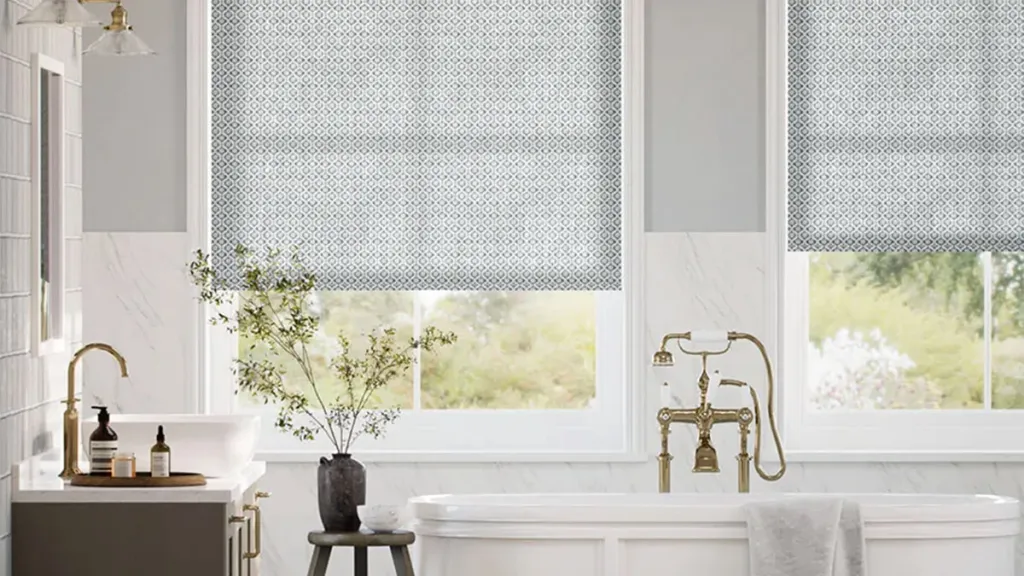
Roman blinds can work in bathrooms, but they aren’t always the first recommendation.
Many homeowners searching for waterproof Roman blinds for bathroom spaces are often surprised to learn that most Roman blinds are fabric-based and not fully waterproof.
That doesn’t mean they should be ruled out completely.
In larger bathrooms with good ventilation and lower levels of condensation, moisture-resistant fabrics can perform well and add a softer look than many other blind styles.
However, in smaller bathrooms where steam regularly builds up after showers, roller or faux wood blinds generally require less maintenance and tend to last longer.
Choosing Based on Your Bathroom Type
Not every bathroom has the same requirements.
A family bathroom used several times a day will experience far more moisture than a guest bathroom used occasionally.
For example:
Small bathrooms
- Waterproof roller blinds
- Compact and easy to maintain
Family bathrooms
- Faux wood blinds
- Moisture-resistant roller blinds
En-suites
- Roller blinds
- Moisture-resistant Roman blinds
Bathrooms with limited ventilation
- Fully waterproof materials
- PVC-based options
When comparing styles, it’s worth looking beyond colour and focusing on how the room actually functions day to day.
While researching options, many homeowners browse galleries and collect ideas online. At Expression Blinds, we often find that practical considerations such as condensation and privacy have a greater impact on long-term satisfaction than appearance alone.
Waterproof vs Moisture-Resistant: What’s the Difference?
These terms are often used interchangeably, but there is a difference.
| Feature | Waterproof Blinds | Moisture Resistant Blinds |
|---|---|---|
| Water absorption | None | Minimal |
| Condensation resistance | Excellent | Good |
| Maintenance | Very easy | Easy |
| Durability in humid rooms | Excellent | Good |
| Best suited for | High-moisture bathrooms | Well-ventilated bathrooms |
For most households, moisture proof blinds perform perfectly well. However, bathrooms that regularly experience heavy condensation generally benefit from fully waterproof materials.
Common Problems Homeowners Encounter
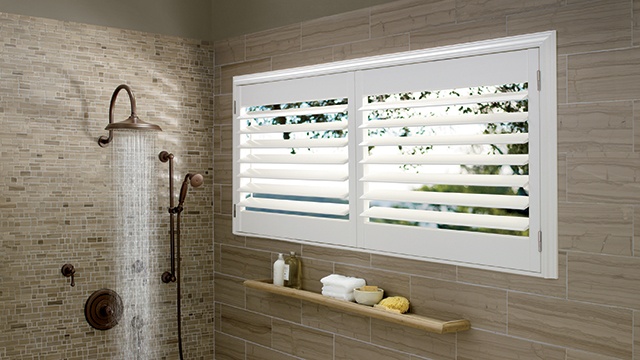
Many bathroom blind issues aren’t caused by poor products. They’re caused by choosing a style that isn’t suited to the environment.
Some of the most common problems include:
- Mould developing on fabrics
- Warping caused by excessive moisture
- Discolouration over time
- Poor light control
- Fittings loosening through regular use
In some cases, homeowners assume the blind itself is faulty when the issue is actually related to installation. If you’ve ever wondered why blinds keep falling down, the cause is often incorrect fitting, unsuitable fixings, or repeated exposure to moisture affecting the surrounding surfaces.
Choosing a suitable blind from the beginning helps avoid many of these issues.
Don’t Forget About Unusual Spaces
Bathrooms aren’t the only environments where moisture can be a concern.
Many of the same considerations apply when selecting blinds for narrowboats, where condensation and changing temperatures are often part of everyday life.
In both situations, choosing materials that cope well with humidity generally leads to better long-term performance and fewer maintenance issues.
Making the Right Choice
If you’re looking for a straightforward recommendation, waterproof roller blinds and faux wood blinds are usually the safest choices for most bathrooms.
They offer:
- Strong moisture resistance
- Easy cleaning
- Reliable privacy
- Long-lasting performance
Roman blinds can still work in the right environment, while double roller blinds provide additional flexibility for homeowners wanting greater control over light levels.
If you’re unsure which style would suit your bathroom best, seeking Expert advice before making a purchase can help avoid costly mistakes and ensure you choose something suitable for the space.
Final Thoughts
The best bathroom blind isn’t necessarily the most expensive or the most decorative.
It’s the one that can handle the conditions of the room while providing the privacy, light control, and practicality you need every day.
For most homes, waterproof roller blinds and faux wood blinds remain the most reliable options. They cope well with humidity, require very little maintenance, and are available in a wide range of styles to suit modern and traditional bathrooms alike.
If you’d like help comparing options or exploring suitable styles for your home, you can book an appointment and discuss your requirements with a member of the team.
FAQs
What are the best blinds for a bathroom?
Waterproof roller blinds and faux wood blinds are often considered the best options because they cope well with moisture and are easy to maintain.
Are waterproof bathroom blinds worth it?
Yes. In bathrooms with frequent condensation, waterproof materials can help reduce maintenance and improve longevity.
Can Roman blinds be used in a bathroom?
They can, provided the room has good ventilation and a suitable moisture-resistant fabric is chosen.
What are moisture-resistant blinds?
These blinds are designed to cope with humid conditions without absorbing excessive moisture.
What is the difference between waterproof and moisture-resistant blinds?
Waterproof blinds do not absorb water, whereas moisture-resistant blinds are designed to tolerate humidity but may not be completely waterproof.


