


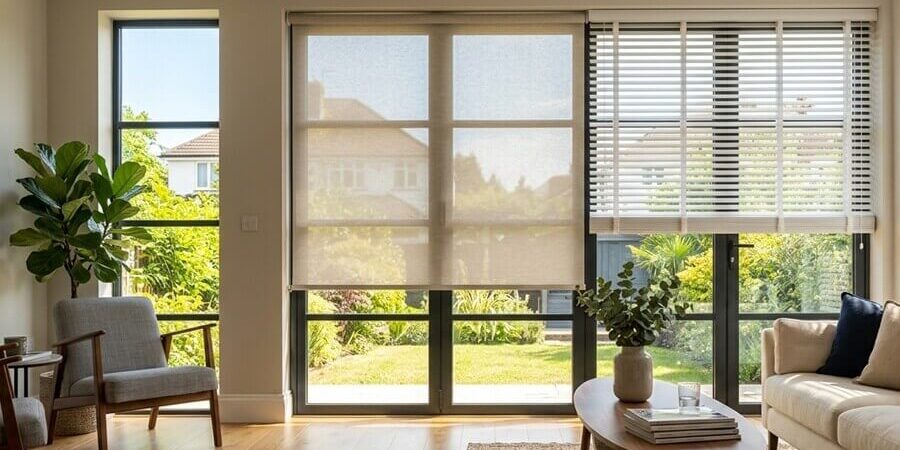
A room that turns into an oven by mid-afternoon is usually a shading problem before it is anything else. Sunlight comes through the glass, lands on the floor and furniture, and turns into heat with nowhere to go. The best blinds for summer stop a good share of that sunlight at the window, take the glare off your screen or sofa, and still give you privacy once the windows are open to cool things down.
Top Options for Summer Window Blinds
- A reflective backing on the side facing the glass sends sunlight back outside before it turns into heat.
- Some blinds carry a solar control coating that reflects more heat than an ordinary fabric, which is worth asking about for a room that gets sun for most of the day.
- Paler fabrics reflect more sunlight than dark ones, which tend to absorb it and pass the warmth into the room.
- A blind that sits close to the glass leaves less of a gap for heat and light to leak around the edges.
Those four choices matter, but how and when you use the blinds matters just as much.
How Much Difference Do Blinds Make to a Hot Room?
A noticeable one. In an independent study supported by the British Blind and Shutter Association (BBSA), rooms with internal blinds closed had operative temperatures 8 to 13°C lower than rooms with no shading. Your own home will give different numbers, because they depend on which way the window faces and how much glass you have, but the direction is consistent. Shading the glass works better than waiting for the heat to leave. The US Department of Energy puts the figure for highly reflective blinds, fully closed, at around a 45 percent cut in heat gain.
For blinds to keep a room cool, timing counts as much as the fabric. The BBSA advises keeping blinds closed through the hottest part of the day and opening them at night, when it is cooler outside, so the building can lose the heat it has picked up. That is easy to say and awkward to do if you are at work from eight until six. It is where motorised blinds earn their place: set to close on a timer, or lowered by a sun sensor, they shade the room before the heat builds instead of after you have come home to it.
Blinds to Reduce Glare Without Losing the Light
Glare is a different problem from heat, and the fix is different too. A fabric that blocks light removes glare completely but leaves the room dim, which suits a bedroom and gets frustrating in a home office. A light-filtering fabric scatters the sun instead of stopping it, so you can read a screen or watch television without squinting and still see the garden.
If the glare only hits at one time of day, low afternoon sun on a television being the usual example, choose the fabric for that hour and lower the blind only while it lasts.
Keeping Your Privacy When the Windows Are Open
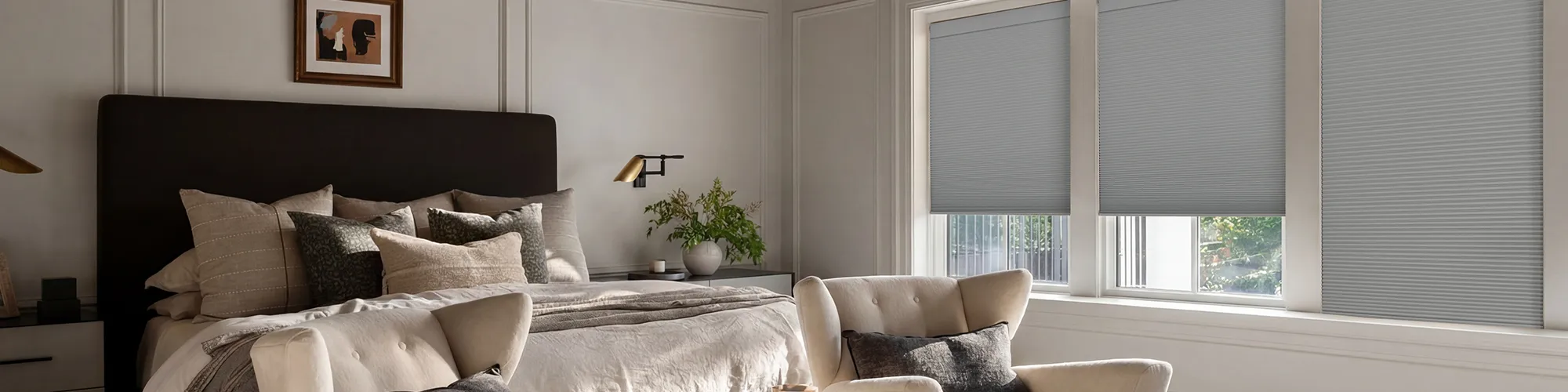
Cooling a room properly means opening windows once the air outside is cooler, and that is when privacy gets awkward. In daylight, a light-filtering fabric generally stops people outside from seeing in clearly. After dark, with the lights on indoors, the same fabric can show shapes and movement to anyone passing. If the room faces the street, a light-blocking fabric is the safer choice for the evenings.
Doors and Large Glazed Areas
Big areas of glass let in the most sun, and doors have to open and close every day on top of that, which limits what will fit. Blinds for French doors are built to sit clear of the handles, so the doors still swing freely with the blind down. Wide sliding doors are a separate puzzle, which is why we compared the window covering options for sliding glass doors in their own guide.
Fit Matters as Much as Fabric
A blind only cools a room if it stays where you put it. Heavier light-blocking fabrics add weight, and if your blinds keep falling down, the fixings are usually the first place to look. Getting them into something solid, and measuring so the blind sits close to the glass, does more for summer performance than upgrading the fabric.
Choosing Blinds for Your Own Home
Every room takes the sun differently, and the right mix of fabric, colour and fit depends on how you use it. If you would like to compare the practical differences between blind types before deciding, our buying guide covers what tends to suit each kind of room.
If you would rather talk it through, call 0161 241 9686 and we will discuss your windows and arrange a free, no-obligation visit to measure up.
FAQs
Do blinds keep a room cool?
Yes, when they are closed before the sun reaches the window. The British Blind and Shutter Association advises keeping blinds closed through the hottest part of the day and opening them at night to let the room cool. The US Department of Energy puts the heat gain reduction for fully closed, highly reflective blinds at around 45 percent.
Which blinds reduce glare without making a room dark?
Blinds made from a light-filtering fabric. They scatter direct sun instead of blocking it, so you can read a screen or watch television without squinting and still keep daylight in the room.
Are light or dark blinds better in summer?
Light colours. Paler fabrics reflect more sunlight, while darker ones absorb more of it and give it off as heat inside the room. A reflective backing on the side facing the glass helps whichever colour faces into the room.


